A lot of people still think games are just a way to waste time, but for me they are something more. They help me relax after stressful days at work, and they even support my Japanese learning when I use them in the right way. At the same time, I’ve learned that not all language in games is useful for real life, so I need to be intentional or it becomes “just entertainment.”
Using Games to Recover From Work Stress
Work can be mentally exhausting: deadlines, meetings, communication, and constant pressure to perform. When I come home, my mind is often still stuck in “work mode,” replaying conversations or worrying about tomorrow. In those moments, gaming is like a reset button for my brain.
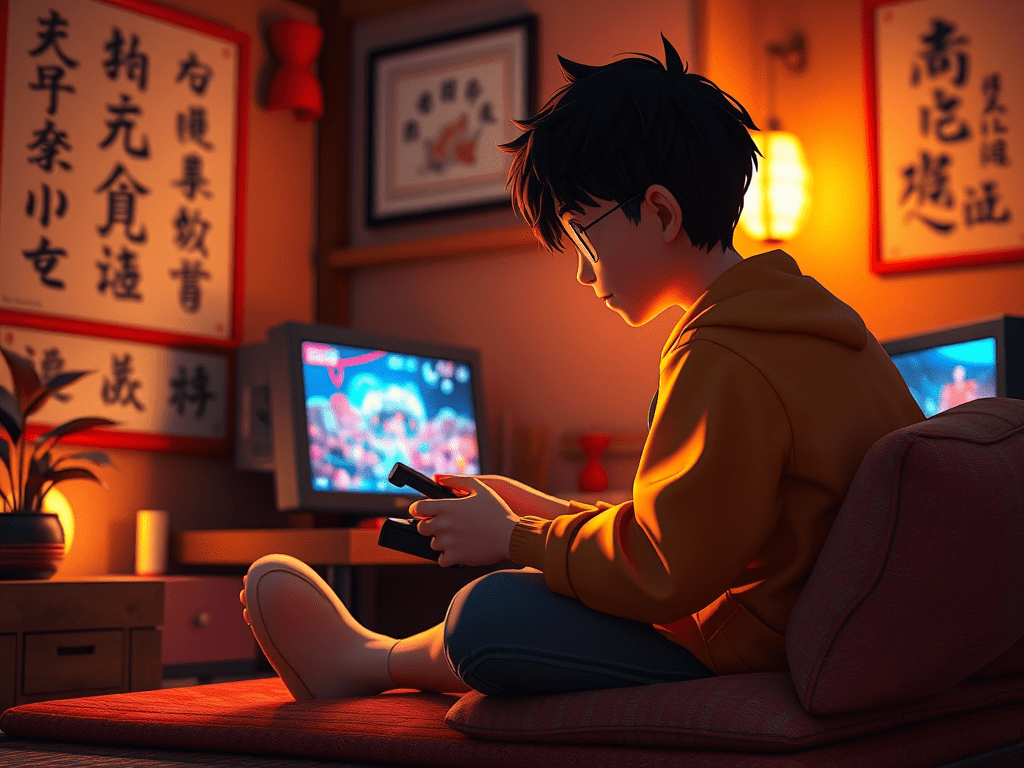
When I sit down and start a game, my focus shifts from real problems to clear, simple goals on the screen. Maybe I am exploring a new area, finishing a quest, or just doing daily tasks in a cozy game. The music, visuals, and small achievements help me calm down. Instead of overthinking emails and tasks, I concentrate on something I can actually control—my character, my choices, and my in‑game progress.
This doesn’t magically erase all stress, but it gives my mind a break. After playing for a while, I usually feel lighter and more relaxed, and it becomes easier to sleep or prepare for the next day. For me, games are not about escaping reality forever; they are a gentle way to recharge so I can face reality again with a bit more energy.
My Experience Learning Japanese With Games
One of the most interesting ways games have helped me is with learning Japanese. I used to play Genshin Impact with Japanese voices (and sometimes Japanese text) to practice listening and vocabulary. Instead of only studying from a textbook, I wanted to hear Japanese in a more natural, emotional context.
While playing, I would listen carefully to the characters’ voices and match them with the subtitles and the situation in the story. Because Genshin Impact is fully voiced, I could hear tone, rhythm, and natural speed all the time. Some phrases, expressions, and words started to feel familiar because I heard them again and again in different scenes. It was much more fun than just reading example sentences, and I noticed that certain vocabulary stuck in my memory thanks to the story and the characters.
Games like this are very good for listening practice and for getting used to how Japanese sounds in real time. They also help with motivation: even when I’m tired, I still want to see what happens next in the story, and I end up listening to more Japanese without forcing myself.
The Problem: Game Japanese vs Real-Life Japanese
However, I also realized an important limitation. Not all Japanese in games is useful for daily life, especially if the game is fantasy, battle-focused, or very dramatic. A lot of expressions in games are:
- Very casual, rough, or impolite
- Exaggerated, like anime-style catchphrases
- Related to fighting, magic, or fantasy situations that never appear in normal conversation
If I copy those phrases directly, I might sound strange, childish, or even rude in a real Japanese office or everyday situation. For example, a character yelling a dramatic line in battle might be cool in the game, but saying something similar to a coworker or friend would be very inappropriate.
Because of this, I understand that learning only from games is risky. If I don’t check the meaning and level of politeness, I might fill my head with words that I can’t actually use in normal life. In that case, my gaming becomes just entertainment, not true language learning.
How I Try to Use Games Wisely for Japanese
To avoid that problem, I try to use games as a supplement, not my only study method. A few things help me keep a good balance:
- I focus on listening, not copying every line. I pay attention to rhythm and common phrases but stay careful about style and politeness.
- When I hear a phrase that sounds useful (like greetings, simple questions, or everyday reactions), I write it down and check it later in a dictionary, textbook, or reliable website.
- I remind myself that office Japanese and polite conversation are different from anime or game speech. For that, I still rely on textbooks, classes, or proper learning materials.
- I treat Genshin Impact and other Japanese-voice games as a way to get more natural listening exposure and motivation, not as my main teacher.
With this mindset, gaming becomes part of my study routine instead of a distraction from it. I still enjoy the game, the story, and the characters, but I also know which vocabulary is really worth remembering for daily life and which is just for fun.
Finding a Healthy Balance Between Fun and Growth
For me, the key is balance. If I only think “this is study,” I lose motivation and feel heavy. If I only think “this is entertainment,” I might spend hours playing but not gain anything meaningful. So I try to stand in the middle.
On stressful days, I allow myself to use games mainly to relax and reset my mind. On other days, I use them more actively for Japanese: listening carefully, checking new words, and noticing patterns. I still combine this with more traditional study methods so that my Japanese is polite, natural, and usable in work and daily communication.
In the end, gaming is a tool. If I use it with intention, it can help me manage work stress, build better listening skills, and stay connected to my Japanese-learning goals. If I use it without thinking, it turns into pure entertainment. The difference is not the game itself, but how I choose to play and what I decide to take from it.
 Kyaw Myo Aung – Portfolio & Journal
コメントを残す